
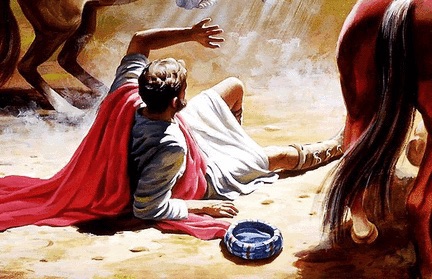
How it began.
1. The Beginning: A Movement Without Maps
When the gospel first broke loose from Jerusalem, it was not a religion—it was a rebellion of mercy.
The first disciples met in homes, fields, markets, and caves. They had no priests, no altars, no creeds—only the memory of a man who healed on the sabbath and broke bread with sinners.
But the Gentiles who joined them had no inherited framework—no Torah, no temple rhythm, no calendar of feasts. They believed in Christ but lacked the centuries of Jewish soil in which His message had grown.
So when the Spirit moved among them, they needed language and structure to hold it.
Without a framework, they began to borrow one.
2. Building a Structure from What They Knew
The Gentile believers lived in a Greco-Roman world of patrons, clients, and households.
So their gatherings began to look like the culture around them:
Elders resembled local patrons. House churches reflected Roman domestic order. Epistles became the administrative letters that kept communities connected.
When persecution came, structure helped them survive. They developed hierarchies for safety, liturgy for continuity, and moral codes to define insiders from outsiders.
None of this was evil—it was human.
But what began as scaffolding soon hardened into doctrine.
3. The Letters of Paul: From Counsel to Canon
Paul’s letters were situational—personal correspondence to specific communities wrestling with specific crises.
He wrote as a missionary, not as a lawgiver. He even says, “I speak this by permission, not of commandment” (1 Cor 7:6).
Yet these letters were the first Christian texts to circulate in Greek — short, memorable, easy to copy and teach.
By the time the Gospels were written decades later, Paul’s words had already become the spine of Gentile theology.
What he wrote to correct small communities was soon read as universal command.
When his letters were collected, copied, and read aloud in worship, they took on the aura of Scripture itself.
Practical advice to Corinth became divine legislation for the whole world.
And so, the Word about Christ was placed beside the Word of Christ.
4. The Council and the Codex: How the System Sealed Itself
By the second century, scattered assemblies needed cohesion. They faced heresy, persecution, and fragmentation.
To survive, they canonized certain writings and standardized belief. The letters of Paul, useful and adaptable, became the blueprint.
The process was slow but inevitable:
Letters became readings. Readings became Scripture. Scripture became law. Law required law-keepers.
Bishops emerged. Creeds formed. The simplicity of “follow Me” turned into the complexity of “submit to us.”
The Gentile church, having built its framework from borrowed Roman order and Pauline commentary, declared its own structure divinely ordained.
In the name of preserving truth, they enthroned bureaucracy. The living movement ossified into an institution. And the voice of the Carpenter was buried under the minutes of the Council.
5. The Conflation: When Commentary Became Commandment
Conflation is subtle.
It happens when the context of a letter is forgotten but the authority of its author remains. By merging Christ’s words and Paul’s commentary into one undifferentiated “Word of God,” the church eliminated the tension that once kept conscience alive.
The result?
Every local instruction became eternal law. Every cultural compromise became holy tradition. Every later interpretation carried the same weight as the red letters themselves.
From that conflation came dogma, hierarchy, and eventually empire.
Rome crowned it, theologians systematized it, and for seventeen centuries the church has confused its own paperwork with revelation.
6. The Cost of Conflation
The record is written in blood and bureaucracy:
Councils condemning heretics who were simply too close to Jesus’ actual teachings. Crusades launched in defense of a “faith” Christ never invented. A book worshipped more fiercely than the God who breathed through it. Souls crushed under doctrines meant to keep order, not inspire freedom.
This is the tragedy of the Gentile church:
In trying to protect the truth, they fenced it in.
In defending Christ, they replaced Him.
And in canonizing commentary, they silenced conscience.
7. The Return to the Carpenter
But the first gospel—the one written by a fisherman’s scribe—still stands. Mark’s Christ is not sitting on a throne of theology. He’s walking through fields, touching the unclean, rebuking the rich, laughing with the lost. His truth can be lived by the illiterate and practiced by the poor.
To return to Him, we must peel away the layers of conflation until only the living Word remains. That doesn’t mean burning the letters—it means putting them back where they belong: as testimony, not tyranny; as guidance, not gospel.
The conscience of the Spirit is the law of the Gentiles, written not on scrolls but on hearts. When the church forgets that, it becomes the very empire Christ died to unmask.
THE FINAL WORD
The Gentile church began with wonder and ended with paperwork. It built a structure, then mistook the scaffolding for the sky. It raised Paul’s letters until even Christ Himself had to quote them to be heard.
But the People of the Light know better.
We follow the Carpenter with calloused hands and dirt on His robe—not the committees that built temples in His name. The system that claimed to protect the Word has become its jailer.
So we are breaking the bars.
Because the true church is not built on the writings of men—it’s built on the life of God walking barefoot through the dust, calling out, even now,
“Follow Me.”
 The People’s Revival